
Exposure to microgravity during extended space missions induces significant physiological changes that challenge the body’s cardiovascular system, vascular regulation, and brain function. These changes, occurring across acute, subacute, and chronic phases, affect both the structure and function of the vascular system, as well as cerebral blood flow and cerebrovascular regulation. The absence of gravitational forces alters fluid distribution, vascular tone, and autonomic regulation, leading to profound adaptations. This review explores these phases of vascular and brain changes, highlighting the adaptive responses and their potential implications for astronaut health, particularly during long-duration missions.
Acute phase
Acute exposure to microgravity triggers a cascade of cardiovascular changes primarily driven by fluid redistribution10. With the absence of Earth’s gravitational forces, approximately two liters of blood and interstitial fluid shift from the lower extremities to the thoracic cavity and head10. This cephalad fluid shift results in an immediate increase in central blood volume and central venous pressure (CVP), which initially rises but then declines after a few hours due to reduced intrathoracic pressure11. The resultant increase in preload temporarily enhances stroke volume by as much as 46%, leading to a 22–36% increase in cardiac output1. However, despite this increase, mean arterial pressure (MAP) and systolic blood pressure (SBP) remain relatively stable11. This paradox arises due to a compensatory reduction in systemic vascular resistance (SVR) and a concomitant reflexive decrease in heart rate, maintaining overall perfusion without excessive hypertensive responses11. The baroreceptor reflex plays a key role in stabilizing MAP by modulating both autonomic tone and vascular resistance, preventing excessive fluctuations in arterial pressure12.
This fluid redistribution not only causes transient facial edema and upper airway congestion but also influences autonomic regulation1. Initially, baroreceptors respond to the increased central blood volume with parasympathetic activation and reduced sympathetic outflow. However, with sustained exposure to microgravity, a progressive resetting occurs due to sustained exposure to microgravity, leading to an overall reduction in baroreceptor sensitivity12. This adaptation contributes to impaired autonomic function and post-flight orthostatic intolerance upon return to Earth12.
Cardiac morphology rapidly adapts to the altered hemodynamic environment. Echocardiographic studies reveal a more spherical heart, attributed to changes in myocardial stress and intracardiac pressure gradients1. Additionally, left ventricular mass declines within the first few days, owing to reduced mechanical load on the heart in microgravity conditions13. Left ventricular ejection fraction (LVEF) remains preserved in the acute phase, but the decrease in myocardial workload leads to early cardiac remodeling, which may influence long-term cardiac reserve13. While these changes appear adaptive, the long-term consequences of myocardial atrophy and functional reserve upon re-entry remain uncertain. Studies have shown that some of these changes can be reversed upon return to normal gravity, but the recovery process may vary between the left and right ventricles14. The right ventricle, in particular, may take longer to recover or experience more persistent changes13.
Electrophysiological adaptations also emerge, with an increased incidence of arrhythmias such as premature atrial and ventricular contractions, atrial fibrillation, and episodes of ventricular tachycardia15. These arrhythmias are often transient and linked to autonomic nervous system adaptations, electrolyte imbalances, and changes in baroreceptor function16. Although fluid shifts increase sympathetic tone, cerebrovascular autoregulation remains intact, preventing major disruptions in cerebral perfusion15. Hypokalemia and hypercapnia may exacerbate electrical instability, and QT prolongation suggests an increased susceptibility to repolarization abnormalities17. While no life-threatening arrhythmias have been recorded in healthy astronauts, these findings raise concerns for individuals with underlying cardiovascular conditions or during extended missions.
Vascular adaptations in microgravity lead to a uniform distribution of arterial pressure across the body, eliminating hydrostatic gradients18. Although MAP and SBP remain stable, diastolic blood pressure (DBP) declines by approximately 5-12 mmHg within the first 24 hours19. This reduction in DBP suggests a decrease in total peripheral resistance, likely as a consequence of both reduced gravitational hydrostatic pressure and altered autonomic control20. Despite the initial increase in central blood volume, lower limb blood flow decreases significantly, accompanied by a rise in vascular resistance over the following days20. This vascular remodeling includes endothelial dysfunction, with early impairments in nitric oxide (NO)-mediated vasodilation due to altered shear stress and mechanical unloading21. Although sympathetic outflow increases in response to microgravity, it does not fully counterbalance the loss of gravitational stress, leading to a blunted vasoconstrictive response that may contribute to post-flight orthostatic intolerance22. Reduced vascular smooth muscle contraction, altered adrenergic responsiveness, and changes in oxidative stress pathways contribute to these functional changes, which may predispose astronauts to long-term vascular stiffness and increased cardiovascular risk upon return to Earth20.
Blood composition changes significantly, with a rapid increase in central blood volume leading to suppression of antidiuretic hormone (ADH) and activation of cardiac stretch receptors, erroneously signaling hypervolemia23. These triggers increased diuresis and natriuresis, resulting in a 10–20% reduction in plasma volume within the first 24–48 hours24. Hemoconcentration leads to an initial rise in hematocrit and red blood cell (RBC) count, but as the body adjusts, erythropoiesis is downregulated, causing a gradual decline in RBC mass, a phenomenon known as “space anemia”25.
Orthostatic regulation is significantly impaired after exposure to microgravity due to the absence of gravitational forces and the resulting physiological adaptations. On Earth, gravitational forces induce a hydrostatic pressure gradient that aids venous return when standing15. In microgravity, the absence of gravitational loading leads to baroreceptor desensitization, reducing their ability to sense and respond to blood pressure changes effectively26. This diminished sensitivity results in a resetting of baroreflex function to a lower operational range, weakening the reflexive cardiovascular adjustments needed for standing postures on Earth26. Vagal baroreflex gain decreases during spaceflight, further impairing autonomic responses27.
Microgravity-induced fluid shifts lead to an increase in central blood volume, triggering diuresis and a subsequent 10–20% reduction in plasma volume24. This hypovolemia contributes to a reduction in stroke volume and cardiac output upon standing, further exacerbating orthostatic intolerance28. Studies confirm that while muscle sympathetic nerve activity (MSNA) increases during spaceflight as a compensatory mechanism, it does not fully translate into an adequate vasoconstrictive response due to endothelial dysfunction, altered adrenergic receptor sensitivity, and persistent vasodilation from reduced mechanical loading20,29. As a result, peripheral vascular resistance fails to increase proportionally, leading to post-flight orthostatic intolerance20.
In summary, the acute cardiovascular response to microgravity is characterized by fluid redistribution, increased central blood volume, reduced myocardial workload, and transient cardiac remodeling. The paradox of stable MAP and SBP despite increased preload is reconciled by a compensatory reduction in SVR and autonomic adjustments, which ultimately lead to long-term vascular adaptations. Baroreflex compensation maintains hemodynamic stability in the acute phase, but the gradual desensitization of this reflex, coupled with plasma volume depletion and impaired vasoconstrictive responses, contributes to post-flight orthostatic intolerance. Furthermore, cerebrovascular autoregulation appears to be preserved despite increased sympathetic outflow, suggesting a unique adaptation of cerebral perfusion mechanisms to weightlessness. The increased incidence of arrhythmias, endothelial dysfunction, and early vascular remodeling emphasize the need for targeted countermeasures to mitigate cardiovascular risks during spaceflight.
Subacute phase
During extended space missions, lasting weeks to months, the cardiovascular system undergoes further adaptations beyond the initial acute phase. One key change is the sustained reduction in plasma volume, which, along with altered vascular dynamics, leads to a persistent decline in stroke volume24. Despite this, cardiac output remains stable at rest due to a compensatory increase in heart rate10. However, this adaptation limits the heart’s ability to support higher physical exertion10. The myocardium undergoes structural remodeling, with reductions in left ventricular mass of up to 9.1%, mirroring the deconditioning seen in prolonged bed rest30.
Vascular remodeling continues as the unloading of gravitational forces diminishes mechanical stress on large arteries, increasing arterial stiffness and endothelial dysfunction31. This is particularly evident in the femoral and carotid arteries, where reductions in luminal diameter and intima-media layer thickening suggest accelerated vascular aging32,33. Impaired nitric oxide (NO) bioavailability reduces vasodilation, predisposing astronauts to long-term cardiovascular complications upon return to Earth34.
Cerebrovascular adaptations become more pronounced during this phase. Despite central blood volume reductions, cerebral blood flow remains stable, likely due to compensatory cerebral vasodilation35,36. However, the sustained fluid shift increases intracranial pressure, contributing to SANS, with symptoms such as headaches, blurred vision, and cognitive disturbances37,38. Prolonged exposure to elevated CO₂ levels exacerbates these symptoms by inducing further cerebral vasodilation, potentially leading to persistent neurovascular changes affecting cognitive function and visual acuity35,39.
Chronic exposure to elevated CO₂ also impacts chemoreceptor function in the medulla oblongata, which regulates cerebrovascular responses to fluctuations in CO₂ and pH40. Prolonged hypercapnia leads to chemoreceptor desensitization, impairing the regulation of cerebral blood flow in response to metabolic demands40,41. This could have significant implications for astronauts on deep-space missions, where CO₂ control is more challenging41. Further research is necessary to understand the long-term effects of hypercapnia on cerebrovascular function and to develop effective countermeasures.
Subacute spaceflight also leads to a decline in orthostatic tolerance. The combined effects of plasma volume depletion, baroreceptor desensitization, and reduced vascular resistance impair the body’s ability to regulate blood pressure upon re-entry16,27,42,43. This highlights the extent of autonomic and vascular deconditioning, particularly the blunted baroreflex response, which prevents necessary vasoconstriction to maintain cerebral perfusion when standing16,43.
Despite these challenges, compensatory mechanisms help sustain circulatory stability in microgravity, but these adaptations come with trade-offs. Prolonged cardiovascular and neurovascular changes during spaceflight may have lasting effects on astronaut health. Understanding these mechanisms is essential for developing countermeasures, including tailored exercise regimens and pharmacological interventions, to mitigate the adverse effects of extended space travel.
Chronic phase
In the chronic phase of spaceflight, lasting several months or more, significant cardiovascular adaptations continue. Studies have reported cardiac atrophy during prolonged spaceflight; however, recent findings suggest that exercise countermeasures may mitigate these effects, particularly in long-duration spaceflight. A study on 13 astronauts after 155 ± 31 days aboard the International Space Station (ISS) found no significant difference in LV mass postflight, suggesting that adaptations to microgravity may be more variable than previously assumed44. These findings suggest that the extent and variability of cardiovascular changes during long-duration spaceflight may be more nuanced than previously assumed.
Long-duration spaceflight induces complex cardiovascular adaptations with varying effects on left ventricular (LV) structure and function. Left ventricular function undergoes remodeling during the chronic phase, with research showing that cardiac output and stroke volume increase by 35-41% between 3 and 6 months on the ISS, challenging previous beliefs that spaceflight leads to a net reduction in cardiac output45. This suggests an adaptive response to microgravity, as the cardiovascular system adjusts over time, potentially due to factors like exercise countermeasures that help maintain cardiovascular health during extended missions. Thus, the impact on stroke volume differs between the acute and chronic phases. While earlier studies reported cardiac atrophy, recent research has reported that LV mass and volume are generally preserved45. Echocardiographic assessments have reported modest reductions in LV wall thickness and end-diastolic volume, suggesting decreased preload and chamber size46. These adaptations reflect subtle but notable changes in cardiac function during prolonged microgravity exposure.
Impairments in contractile function are evident postflight, with astronauts exhibiting reduced left ventricular ejection fraction (LVEF) and increased left ventricular end-systolic volume (LVESV)47. These changes, particularly pronounced in long-duration missions, suggest a decline in myocardial contractility due to factors such as cardiac muscle atrophy, altered protein synthesis, and changes in autonomic regulation48. A decrease in LVEF indicates diminished efficiency in blood ejection, while an increase in LVESV suggests incomplete ventricular emptying, both of which may increase cardiovascular stress upon return to Earth.
Prolonged exposure to microgravity leads to significant alterations in autonomic control and vascular function. Studies have shown a reduction in baroreceptor sensitivity following extended space missions, impairing blood pressure regulation during postural transitions and contributing to orthostatic intolerance upon re-entry11. While there is evidence of increased sympathetic nervous system activity, the relationship with plasma norepinephrine levels is complex, with some studies reporting elevated concentrations and others showing no significant change11. Recent findings challenge the assumption of reduced total peripheral resistance (TPR), suggesting instead that TPR may increase during long-duration missions as a compensatory mechanism to maintain blood pressure despite reduced circulating volume49.
Vascular remodeling is another prominent feature of chronic spaceflight, particularly in large elastic arteries. Long-term vascular structure and function, evaluated by flow-mediated dilation and carotid intima-media thickness (IMT), have been observed during prolonged spaceflight. Previous studies reported a 10-12% increase in carotid IMT after six months of spaceflight and a 20% increase after a year, indicating early vascular stiffening. This remodeling was accompanied by a reduction in arterial compliance, which may predispose astronauts to hypertension and atherosclerosis in the long term50. However, more recent research on astronauts during long-duration spaceflight (>4 months) found no significant changes in mean carotid IMT or the cross-sectional area of the intima-media layer during or after spaceflight, suggesting that vascular remodeling may not be as pronounced or consistent as initially believed.51.
During the chronic phase of spaceflight, lipid metabolism undergoes significant alterations, with elevated levels of angiotensin II, aldosterone, and oxidative stress markers contributing to vascular remodeling and endothelial dysfunction52. Spaceflight activates the renin-angiotensin-aldosterone system (RAAS), leading to increased levels of angiotensin II and aldosterone52. Angiotensin II exacerbates oxidative stress, further impairing endothelial function53. These hormones contribute to endothelial dysfunction, vascular wall hypertrophy, and fibrosis, which are pro-atherogenic processes. This pro-atherogenic state may accelerate the development of cardiovascular diseases in the long term52. Inflammatory markers such as C-reactive protein (CRP) and interleukin-6 (IL-6) remain elevated even after astronauts return to Earth, suggesting prolonged immune responses that exacerbate endothelial dysfunction52.
Chronic spaceflight also affects hematologic adaptations. During spaceflight, red blood cell (RBC) destruction increases by up to 54%, a phenomenon known as “space hemolysis54. This reduction in RBC mass is driven by accelerated turnover and decreased erythropoiesis due to lower erythropoietin levels in microgravity. Upon re-entry, plasma volume increases, leading to dilution of RBCs and hemoglobin concentration, resulting in post-flight anemia. While RBC mass begins to recover after re-entry, aided by elevated erythropoietin levels, full recovery may take weeks, with elevated inflammatory markers contributing to endothelial dysfunction54.
The sustained cardiovascular adaptations in microgravity, including cardiac remodeling, vascular dysfunction, and autonomic impairment, underscore the need for targeted countermeasures to protect astronaut health on extended missions. Artificial gravity simulations, enhanced exercise programs, and pharmacological interventions aimed at reducing vascular and myocardial deconditioning are crucial. As space agencies prepare for deep-space missions, understanding these chronic adaptations and their mitigation will be critical to astronaut health and the success of long-term space exploration missions.
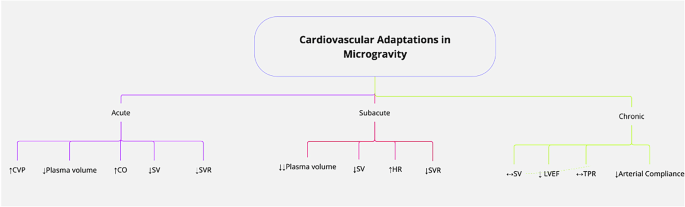
Figure 1 demonstrates the key cardiovascular adaptations to microgravity across acute, subacute, and chronic phases of spaceflight.

CVP central venous pressure, CO cardiac output, SV stroke volume, SVR systemic vascular resistance, HR heart rate, LVEF left ventricular ejection fraction, TPR total peripheral resistance. ↑: Increases; ↓: Decreases; ↔: Remains Stable; ↑: Increases more.
Impact of vascular changes due to microgravity on the neural function
Vascular changes due to microgravity can significantly impact neural function in multiple ways, primarily through altered cerebral perfusion, intracranial pressure (ICP) dynamics, and blood-brain barrier (BBB) integrity.
Cerebral blood flow (CBF) dysregulation
In microgravity, fluid shifts cause an initial increase in central blood volume, including within the cerebral vasculature35. Over time, the body adapts by reducing plasma volume and cardiac output, which may compromise cerebral perfusion55. While autoregulatory mechanisms maintain relatively stable CBF, prolonged exposure to microgravity can lead to impaired cerebral vascular reactivity, reducing the brain’s ability to adjust blood flow in response to metabolic demands56,57. This could affect cognitive function, reaction times, and memory.
Intracranial pressure (ICP) alterations
In microgravity, the absence of gravity-driven venous drainage prevents the normal reduction in ICP that occurs when upright on Earth58. Lawley et al. found that while ICP in microgravity is lower than in the supine position on Earth, it remains higher than the typical upright ICP58. This persistent elevation may explain symptoms like headaches, visual impairment (e.g., SANS), and cognitive fatigue59,60. Though microgravity does not cause pathological ICP increases, the lack of postural variations may contribute to long-term neural effects.
Blood-brain barrier (BBB) disruption
The BBB is crucial for regulating the passage of substances between the bloodstream and the brain61. Microgravity-induced fluid shifts and vascular remodeling may alter BBB permeability, increasing the risk of neuroinflammation and oxidative stress62. Elevated CO2 levels in space further exacerbate this, as CO2-induced vasodilation can weaken the BBB and allow harmful molecules to enter the brain, potentially leading to neurodegenerative changes over long missions63.
Neurotransmitter and autonomic dysregulation
Changes in cerebral perfusion and CO2 exposure can affect neurotransmitter release, particularly those involved in autonomic regulation (e.g., norepinephrine and acetylcholine)64,65,66. This may contribute to dizziness, spatial disorientation, and mood disturbances. Astronauts often report difficulties with balance, coordination, and sensory integration upon return to Earth, highlighting the role of vascular changes in neural processing67.
Impaired waste clearance (glymphatic system)
The glymphatic system, responsible for clearing metabolic waste from the brain, relies on cerebrospinal fluid (CSF) flow, which may be disrupted in microgravity due to altered ICP and vascular changes68,69,70. This could lead to the accumulation of neurotoxic proteins such as beta-amyloid, potentially increasing the risk of neurodegenerative conditions with prolonged space exposure71.
Recommendations
Mitigating the physiological effects of microgravity requires a multifaceted approach. Cardiovascular deconditioning can be countered with artificial gravity training and high-intensity exercise (resistance and aerobic)33. Pharmacological support, such as beta-agonists to prevent myocardial atrophy and vasoconstrictors like midodrine for post-flight orthostatic intolerance, should also be provided72. To maintain plasma volume and reduce hypovolemia-related dizziness, astronauts typically consume a combination of water and salt tablets to create an isotonic solution before re-entry73. For NASA astronauts, this involves drinking 1–1.5 liters of water with salt tablets approximately one hour prior to re-entry73.
Vascular health strategies include NO donors, dietary antioxidants (e.g., vitamin C, flavonoids), and compression garments to support endothelial function and prevent excessive fluid shifts49,74. These measures reduce oxidative stress and vascular remodeling, minimizing cardiovascular risks post-flight.
Neurological countermeasures target ICP and cerebrovascular function. Lower-body negative pressure (LBNP) therapy enhances cerebral venous outflow, mitigating the risk of SANS60. Intermittent head-down tilt may help regulate ICP by improving CBF and dynamic autoregulation75. While improved CO₂ filtration minimizes hypercapnia-induced cerebral vasodilation76. Nanoligomers targeting inflammatory pathways (e.g., NF-κB and IL-6 inhibitors) have shown promise in mitigating neurodegeneration markers associated with microgravity77. These drugs, along with biofeedback training, could help preserve cognitive and autonomic function.
Post-flight rehabilitation is essential for recovery. Tilt table training aids baroreceptor reconditioning while rehydration and electrolyte balancing accelerate plasma volume restoration. Long-term cardiovascular monitoring (echocardiography, vascular imaging) ensures early detection of residual risks. Personalized exercise and dietary plans further support long-term cardiovascular health.
Future directions and limitations
Future research should focus on further elucidating the mechanisms behind microgravity-induced vascular changes and their implications for neural function. Advanced imaging techniques, such as functional MRI and PET scans, could provide deeper insights into cerebral blood flow alterations. Longitudinal studies tracking astronauts before, during, and after spaceflight can help establish causal relationships between microgravity exposure and neural changes. Additionally, the development of countermeasures, such as targeted pharmacological interventions and artificial gravity systems, should be explored to mitigate adverse vascular effects in long-duration space missions.
Despite significant progress in understanding the impact of microgravity on vascular and neural health, several limitations exist. First, the sample sizes in spaceflight studies are often small due to logistical constraints, which limits the generalizability of findings. Second, most studies rely on short-duration missions, whereas long-term effects remain less understood. Third, the extrapolation of animal model findings to human physiology requires careful interpretation, as species-specific differences may influence results. Finally, technological limitations in space-based imaging and monitoring constrain the ability to obtain real-time, high-resolution data.
link