
When Steve Blake moved into his brand new home in 1995, he felt lucky.
The house was well-built. Solid construction. No leaks. The basement was comfortable enough to work in, so every weekday morning, after seeing his kids off to school, the Calgary financial advisor set up shop downstairs in his home office.
Blake kept up that routine for more than a quarter-century, spending roughly six hours a day, five days a week, in the basement.
He had no idea it could be slowly killing him.
In 2023, at the age of 55, he developed a nagging cough. Blake didn’t worry much at first; he felt healthy, biked regularly and had a reputation as one of Alberta’s top golfers.
Then one morning, while gearing up to play a round, the father of two struggled to catch his breath. Doctors later told him devastating news: he had inoperable Stage 4 lung cancer and only 12 to 14 months to live.
Blake and his wife, Kelly, were stunned. Blake had never smoked or even been around secondhand smoke. The couple started doing research, trying to figure out what could have led to such a grim prognosis.
One word kept coming up: radon.
This odourless, invisible and highly toxic gas can build up inside your home. When Blake installed a radon monitor in his basement late last year, its average readings over the winter months were consistently high.
There’s no test or bloodwork they can pull from me that would conclusively say, ‘It was your basement that gave you this cancer, it’s the house that’s going to kill you,’
Blake said during an interview in December with CBC News. Still, the possibilities haunt him.
What was I breathing in, for so long, all those years?
WATCH | How to keep your home safe:
The cancer-causing gas hiding in millions of homes
Radon gas is invisible, toxic and millions of Canadians have no idea it’s hiding in their homes. For The National, CBC’s Lauren Pelley breaks down the health risks and what you can do to keep your home safe.
Yearly radon-induced lung cancer death counts likely in the thousands
No one wants to imagine their home could threaten their health, but when radon seeps in, that’s exactly what happens.
This naturally occurring gas is released from the ground as the uranium in soil and rock breaks down. It isn’t a health concern when it’s diluted in the air, or if someone’s home has a radon mitigation system (new window) to safely funnel the gas outside.
But when radon builds up indoors and is inhaled over time, it exposes people to radiation that wreaks slow and steady havoc on their lung cells.
Radon-induced lung cancer kills an estimated 3,200 Canadians each year (new window), and lung cancer, in general, remains the deadliest type of cancer in Canada, even as smoking rates have dropped dramatically in recent decades.
Yet radon isn’t included in cancer screening criteria since — as Blake says — there’s no existing test to prove that someone has had dangerous, long-term exposure.
A group of cross-Canada scientists are now hoping to change that, by developing innovative ways to test for radon exposure using something most of us throw away: toenail clippings.
Dustin Pearson, the University of Calgary-based research operations manager for the Evict Radon study, acknowledges studying toenails might sound a little weird
at first, but there’s a good reason for it.
There’s something in them that we can actually measure,
he explained.
When you inhale radon, it turns into a type of radioactive lead that is shed in slow-growing bodily tissues like your skin, hair and nails. (Toenails in particular have the least exposure to chemicals and cleaners that could contaminate the samples.)
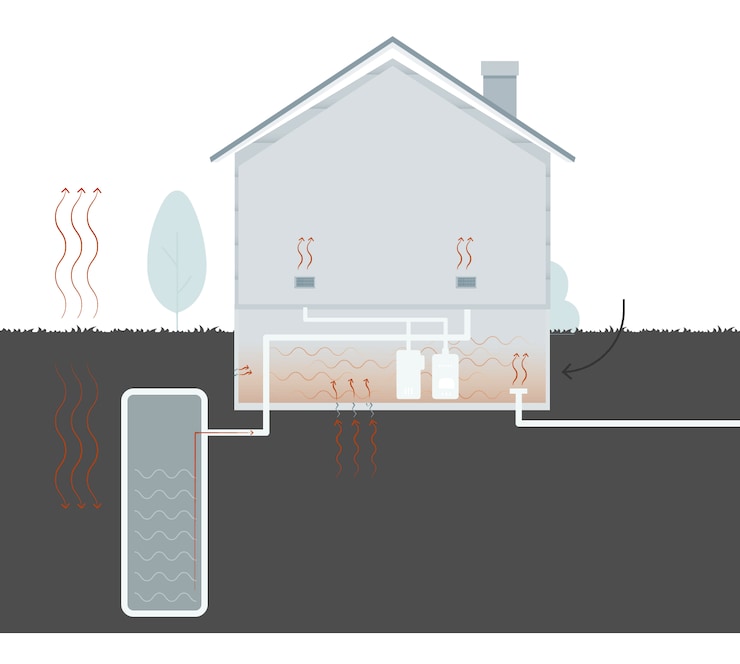
How radon gets into your home.
Photo: 2024 Cross-Canada Radon Survey (CBC)
Team collecting 10K toenail samples
The team is aiming to collect 10,000 samples from across the country, along with radon monitoring data from participants’ homes.
This phase of the research, funded by the Canadian Cancer Society and set to conclude by 2028, is meant to confirm promising results from a much smaller study that showed nail clippings contain more than a decade’s worth of measurable lead.
Biochemist Aaron Goodarzi, a professor at the University of Calgary’s Cumming School of Medicine who leads the Evict Radon project, said his team is expecting a tsunami of toenails
in the year ahead.
When those samples come in, they’re broken down with strong acid inside a special metal-free lab. The resulting toenail mixture — a slurry
or soup,
as the team calls it — is passed through a sealed slot to be analyzed in a mass spectrometer, a large device that uses electric and magnetic fields to separate lead from any other chemical elements that might be present.
Lauren Pelley (new window) · CBC News
link