
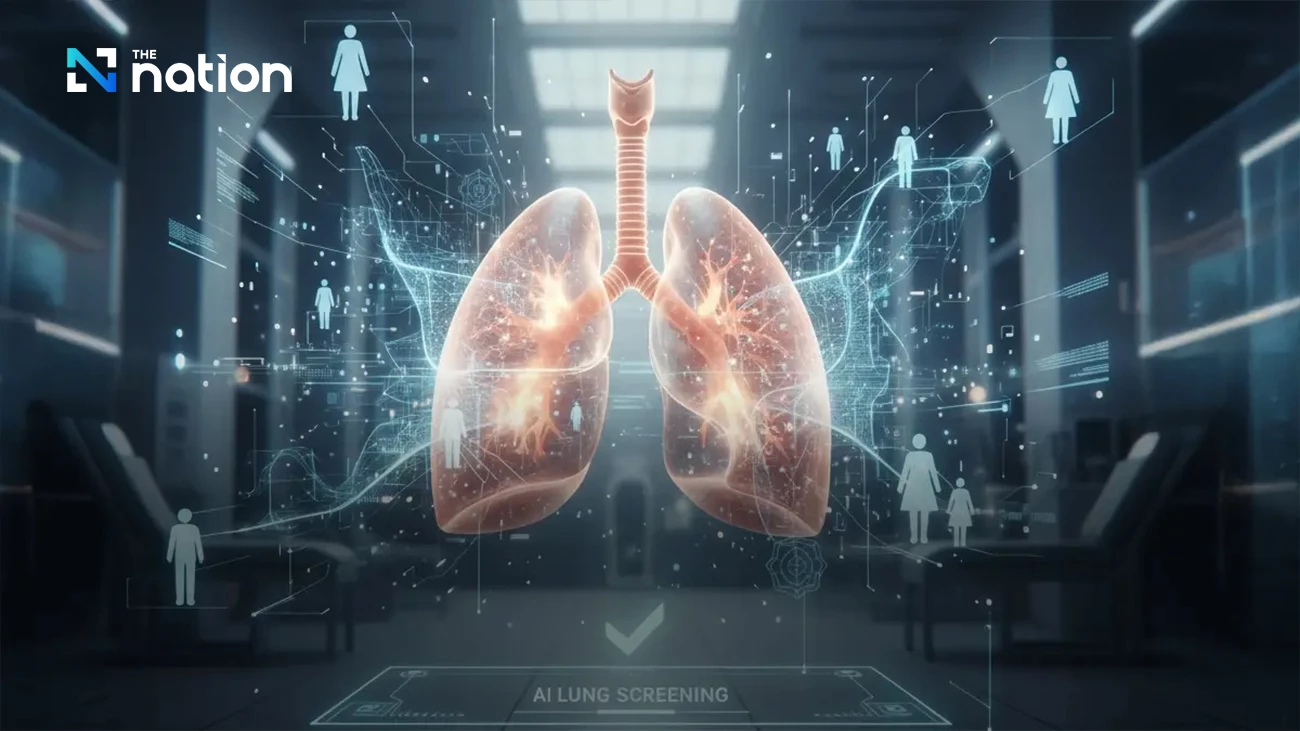
Non-smokers as a new at-risk group
Passakorn Wanchaijiraboon, Deputy Director of Phrapokklao Hospital, noted that while low-dose CT (LDCT) is the gold standard for lung cancer screening, its high cost limits widespread use in Thailand.
AI-enhanced chest X-rays (CXR-AI) offer a more cost-effective and readily available alternative, seamlessly integrating with existing workflows, especially as more than 60% of lung cancer patients in Thailand are diagnosed at stage 4 and are often non-smokers. This trend underscores the need to expand screening criteria to include this new at-risk population.
For AI to be used effectively, hospitals should undergo local validation processes based on their own data, as AI performance can vary by clinical context, he said.
Most importantly, “building trust” through evidence-based, transparent, and participatory approaches is key. This includes public education, setting clinical protocols, establishing specialised lung clinics, and collecting patient data and experiences to continuously improve the system.
Ultimately, the successful transition to AI technology will depend on gaining the trust of all stakeholders involved, he concluded.

Designing a sustainable system
Prakaythip Susilprat, Vice President of the Thai Cancer Society, emphasised that early-stage screening brings hope, but real change can only happen when people understand its importance and can access services equally.
The role of AI in reading chest X-rays is crucial, particularly for groups previously not considered at risk, such as non-smokers, young people, and residents in remote areas. These groups are seeing an increase in cases, possibly linked to high PM2.5 levels in various parts of the country.
For this technology to be most effective, we must begin by educating both medical personnel and the public to understand the potential and limitations of AI, alongside ensuring equal access for everyone, regardless of their healthcare rights, she said.
Prakaythip argued that developing a sustainable screening system must not be just for the patients, but with the patients. It is essential to involve patients from the outset through three key approaches:
- Continuous public education campaigns
- Ensuring equitable access to screening across all healthcare systems
- Incorporating patients’ voices in the design of services and the formulation of policies.
The integration of AI into screening is a significant step in enhancing the effectiveness of Thailand’s healthcare system.
The National Health Security Office (NHSO) is currently planning a budget of over 55 million baht in 2025 for a pilot project introducing AI-CXR technology in 167 public hospitals nationwide.
This initiative will assist doctors in diagnosing lung cancer, tuberculosis, and other lung diseases more accurately and quickly. The goal is to expand access for all populations, especially non-smokers or those in remote areas, ensuring they have access to quality screening and healthcare.
However, Prakaythip urged that all sectors must continue to raise awareness about the importance of early-stage screening to maximise the benefits of this advanced technology at a systemic level.
By doing so, she said, we can work toward a future where lung cancer is no longer a leading cause of death but a preventable, detectable, and treatable disease through a robust and sustainable healthcare system.

NHSO supports the use of “AI in reading X-ray films”
The Faculty of Medicine Siriraj Hospital, Mahidol University, in collaboration with Perceptra, has developed an AI-powered innovation for analyzing chest X-ray images.
The system has been certified by the Royal College of Radiologists of Thailand, the Food and Drug Administration (FDA), and Singapore’s FDA. It has also been officially registered as a product under the Thai innovation product list as of December 2023.
The proposal for the use of this AI system in 887 hospitals (excluding health-promoting hospitals) has been submitted to the NHSO for approval. The implementation plan is divided into three phases to ensure nationwide coverage within three years:
- Phase 1 (Fiscal Year 2025): NHSO will support 167 hospitals with a budget of 55 million baht per year.
- Phase 2 (Fiscal Year 2026): NHSO will support 445 hospitals with a budget of 135 million baht per year.
- Phase 3 (Fiscal Year 2027): NHSO will support 887 hospitals with an additional budget of 225 million baht per year.
This service will improve access to healthcare for diseases such as tuberculosis and lung cancer, while easing the workload of doctors who read chest X-rays, particularly in smaller hospitals that lack specialists and larger hospitals with heavy workloads, Prakaythip said.
It also supports the use of AI technology developed in Thailand to international standards. By assisting doctors with AI in reading X-rays, it is expected to significantly increase the detection of tuberculosis cases and facilitate timely treatment, she concluded.
link