
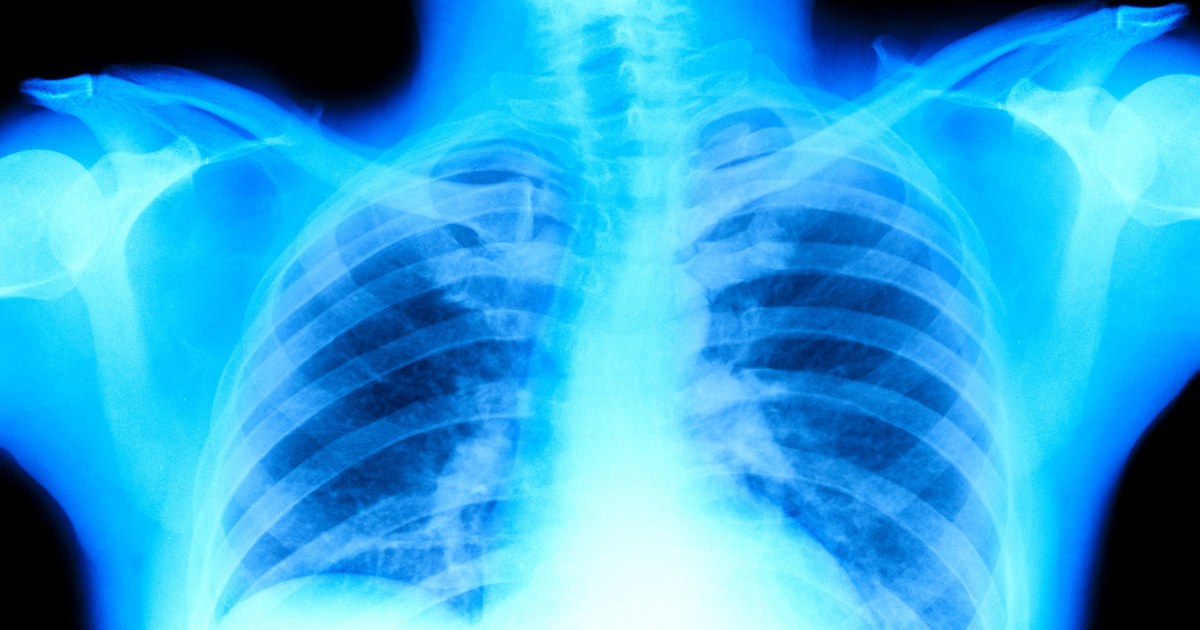
Lung cancer is a killer, claiming the lives of more Americans than any other type of cancer.
That’s because it’s often found late, when it has already spread, says Dr. Humberto Choi, a pulmonologist at the Cleveland Clinic who specializes in thoracic oncology, the diagnosis and treatment of cancer in the chest.
The warning signs can be mistaken for another condition, he notes.
“The disease can be silent. Sometimes, someone may not have symptoms at all. And when symptoms develop, they can be very nonspecific. So someone may think, ‘It’s just my sinus infection or a sinus allergy,’” Choi tells TODAY.com.
“It takes a while for someone to seek help.”
More people die of lung cancer than of colon, breast and prostate cancers combined, according to the American Cancer Society. November is Lung Cancer Awareness Month.
Smoking is still the No. 1 risk factor, linked to more than 80% of lung cancer deaths, the Centers for Disease Control and Prevention notes.
But lung cancer is on the rise in young people who’ve never smoked, mostly women, doctors previously told TODAY.com.
Radon, a naturally occurring gas that can build up in homes and buildings, is a leading cause for people who don’t smoke. A DNA mutation is sometimes to blame in cases of non-smokers getting the disease.
Patients usually come to see Choi when a chest X-ray or CT scan reveals a spot on their lung, also known as a lung nodule — a small area that’s more dense than normal lung tissue, the American Thoracic Society explains.
These spots are often “totally found by accident for an exam that was done for something else,” he says. Most are benign, but some can be early lung cancer.
Knowing what Choi knows about the disease, here are lung cancer symptoms the doctor pays attention to in his own body:
Persistent Cough
Don’t ignore a cough that doesn’t go away. The cough can be dry or productive with a lot of phlegm, or even a mild irritation in the throat — what matters is that it’s persisting, changing, worsening or accompanied by other symptoms like wheezing or chest pain, Choi says.
It’s common to cough due to an infection during cold and flu season, but people generally get better after a few days, he notes. What’s concerning is a cough that sticks around, becomes more frequent or more severe.
Coughing Up Blood
Seeing specks of blood or a lot of it when you cough is a reason to seek a prompt evaluation, Choi warns.
He lists this symptom as one of the biggest lung cancer warning signs he’d worry about the most in his own body.
“It can be the tumor itself bleeding,” Choi says. “As a tumor also grows, it could invade (and) push structures that are around that tumor and can make them bleed.”
Unexplained Weight Loss
Weight loss is a “unique symptom signature for lung cancer in the months prior to diagnosis,” a 2023 study found.
A tumor can cause changes to metabolism and appetite. So losing more than 10% of your body weight when you’re not trying to is associated with a “significantly higher rate of cancer” in general in the next year, according to separate research.
This is the other big lung cancer symptom Choi would worry about the most in his own body besides coughing up blood.
“If I was losing weight and there was no explanation to that, it would be a reason to seek help as well,” Choi says.
Shortness of Breath
It can happen when a tumor causes problems inside the lungs, such as obstructing a bronchus, an airway that leads from the windpipe to a lung, or if it’s large enough to occupy a big area in the chest, Choi says.
Another reason might be that the cancer is draining a person’s energy, and the fatigue can feel like shortness of breath, he adds.
Chest Pain
Depending on the size of the tumor and where it’s located, a person could feel chest pain while coughing, when they are moving their trunk a certain way or while they’re being active, the doctor notes.
“It takes a lot for a tumor to cause pain in the chest,” he says.
“It typically means that a tumor is most likely larger than not and possibly even in contact or invading structures that are around it. Sometimes it can be the chest wall or lining around the lungs.”
Chest pain can sometimes be due to fluid accumulating around the lungs, which can be uncomfortable.
Hoarse Voice
The late ABC News anchor Peter Jennings shocked viewers with his hoarse voice when he announced in 2005 that he’d been diagnosed with lung cancer. He died four months later.
Raspiness can be a symptom because the airways can be affected by the cancer, which can cause wheezing or affect someone’s voice, Choi says.
Also, nerves in the chest serve muscles in the vocal cords, so a tumor that affects those nerves can impact vocal cord movement and cause a hoarse voice, he adds.
Back Pain
It could be due to fluid accumulating around the lungs or the cancer spreading into the spine, Choi says.
Diagnosing Lung Cancer
If you have symptoms, tell your primary care doctor. The first step towards a diagnosis is usually imaging with a chest X-ray or CT scan.
It’s common to have chest imaging for many other reasons, so pay attention to any incidental findings on the report, and if there’s a spot discovered on your lungs, follow up with a specialist, Choi says.
Many people who don’t have any symptoms qualify for lung cancer screening, which is for past or current smokers who are between 50 and 80 years old and smoked a pack a day for 20 years. Choi advises them to sign up for screening even if they feel well.
“If there is anything that is abnormal detected in a chest X-ray or CT scan, don’t let it sit aside. Just have an evaluation,” he says.
“Most people have a good sense of, ‘This is just a cold,’ and they assume they’ll feel better. If they don’t, this is something that they should pay attention to.”
link