


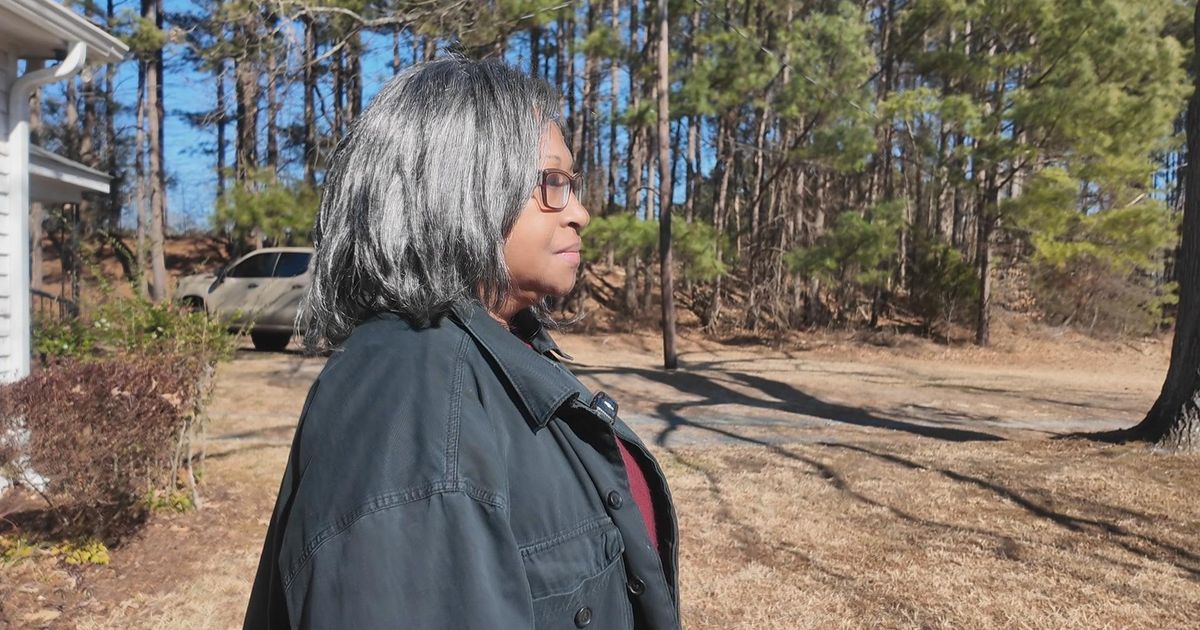
Bonita Green plans her days around the air.
Before stepping outside, the Durham resident checks an app connected to an air quality monitor in her home. The numbers help determine how far she can walk, how long she can stay outside and whether errands will have to wait.
“It is more challenging to breathe, even just walking short distances,” Green said.
Green, who has severe asthma and received a double lung transplant in 2020, is watching closely after the Environmental Protection Agency repealed the “endangerment finding,” a scientific determination that greenhouse gases endanger public health. The decision removes the legal foundation for regulating climate pollution under the Clean Air Act and is expected to face court challenges.
Green described the rollback as “saddening.”
“I feel that we’re placing corporate dollars over the health of individuals,” Green said.
The move is one of the most significant federal climate policy changes in years and part of a broader shift in how the EPA evaluates pollution rules and public health.
What the EPA changed — and why
The endangerment finding was issued in 2009 after the Supreme Court ruled the EPA must determine whether greenhouse gases threaten public health and regulate them if they do. For more than a decade, the determination served as the legal basis for federal limits on climate pollution from vehicles, power plants and other major sources.
EPA Administrator Lee Zeldin called eliminating the finding the “single largest deregulatory action in U.S. history,” saying it removes regulations that imposed “trillions of dollars in hidden costs” and restores consumer choice.
The agency says the rollback will save Americans more than $1.3 trillion by eliminating greenhouse gas standards for vehicles and related compliance requirements. Officials argue the Clean Air Act does not authorize the EPA to regulate greenhouse gas emissions in the way previous administrations did and say major climate policy decisions should come from Congress.
Legal challenges from environmental and public health groups are expected.
A broader shift in air pollution policy
The repeal comes alongside changes to how the EPA evaluates air pollution rules.
In January, the agency announced it would stop calculating the monetary value of health benefits from some regulations, including avoided deaths and health care savings linked to reductions in fine particulate matter and ozone.
The EPA said it will continue to estimate compliance costs for businesses but will no longer “monetize” health benefits while it reviews its economic methods.
For decades, federal regulators used cost-benefit analyses comparing regulatory costs with the estimated value of lives saved and illnesses prevented. Under the Biden administration, the EPA estimated that tighter soot standards could prevent thousands of premature deaths and produce health benefits far exceeding compliance costs.
Living with the consequences of poor air
Green developed asthma around age 5 or 6 and missed significant time in school because of severe symptoms.
“If you’ve never had asthma, it’s difficult for people to understand that feeling of not being able to breathe,” Green said.
Years later, she developed sarcoidosis that damaged her lungs and required a bilateral lung transplant after more than a year on oxygen.
“It was scary,” Green said. “You’re thinking, is it worth it to go through this surgery to only get maybe another two to five years of life?”
Today, she monitors air quality daily and avoids outdoor activity when pollution levels rise.
Green lives in Durham’s Merrick Moore neighborhood, surrounded by highways, rail lines and industrial development. A recent community study estimated more than 15,000 vehicles pass through the neighborhood daily.
“If you figure we’re already in an area of poor air quality, having those additional cars causes a bigger burden on this community,” Green said.
She said many people underestimate how air pollution contributes to disease.
“Air pollution is a big culprit,” Green said.
Experts warn impacts could take time
Daniel Costa, who spent 34 years at the EPA and led its air quality research program, said public health has historically been the foundation of air pollution standards.
“The Clean Air Act specifically said when we establish standards, it would be built on the best available science,” Costa said.
Costa said reducing the role of health benefits in policymaking could make it easier to weaken pollution rules.
“It absolutely could be used to erode the confidence in the standard-making process,” Costa said.
He said health impacts would likely develop gradually.
“Hospitalizations and asthma episodes will slowly begin to creep up,” Costa said. “None of this happens overnight.”
Climate implications
The changes also carry broader implications for climate change, which scientists increasingly describe as a public health issue.
Transportation and power generation remain among the largest sources of U.S. greenhouse gas emissions. Rising global temperatures are linked to more extreme heat, worsening wildfire smoke, stronger storms and longer allergy seasons — all of which can worsen respiratory illness.
“These are scary times,” Green said. “It may get to some people slower, but it will affect everyone.”
Weighing costs and lives
Supporters of deregulation say environmental rules are too costly for businesses. Green sees the tradeoff differently.
“I don’t feel that environmental concerns are costly if you value life and the sustainability of the planet,” Green said.
She said the long-term cost of failing to protect air quality is clear.
“In the long run, it is human life,” Green said.
When asked what she would tell policymakers, her answer was personal.
“What if it was your family? What if it was your child that were at risk?” Green said. “How would you vote then?”
Legal challenges are expected to determine whether the EPA’s rollback stands. For people with asthma and lung disease, the outcome could shape the air they breathe for years to come.
link